The global precision manufacturing sector is undergoing its most radical technological evolution since the invention of the computerized numerical controller. Automated machine tending, multi-pallet pool systems, and in-process Renishaw probing are no longer exclusive to massive automotive assembly lines—they are rapidly becoming standard across modern machine shops in India, the Gulf (GCC), and worldwide.
Far from replacing machinists, automation has dramatically elevated the role. The demand for manual button-pushers has vanished, replaced by an urgent shortage of high-skilled Automation & CNC Integration Technicians who understand cutting physics, robot programming, pneumatic workholding, and cellular PLC communication.
The Pillars of Modern Automated CNC Machining Cells
1. Robotic Machine Tending & Collaborative Cobots
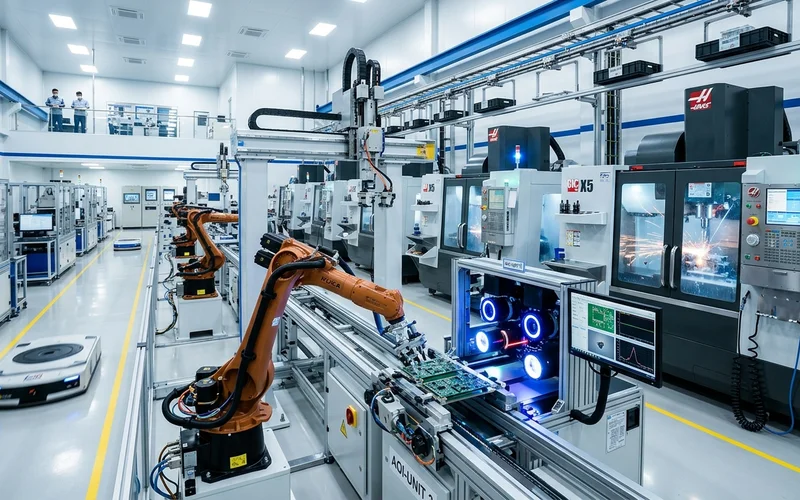
Industrial 6-axis articulated robots (Fanuc, KUKA, ABB) and collaborative robots (Cobots like Universal Robots) are increasingly paired with CNC lathes and VMC milling centers:
- Pneumatic Grippers & End-Effectors: Robots pick raw metal billets from gravity feed tables or matrix trays and position them into pneumatic lathe chucks or hydraulic machine vises.
- M-Code Handshake Signals: The CNC controller signals the robot via discrete 24V DC inputs/outputs (I/O) or industrial bus networks (Profinet / EtherNet/IP). The robot closes the machine door, triggers cycle start, waits for the M-fin cycle completion signal, opens the door, washes the part with air nozzles, and unloads the finished component onto an inspection conveyor.
2. Multi-Station Pallet Pools & Zero-Point Clamping
High-end 4-axis horizontal machining centers (HMCs) and 5-axis vertical machining centers are integrated with 6 to 24-station pallet pool systems:
- Operators fixture diverse jobs onto standardized zero-point tooling plates outside the machine envelope while the spindle cuts continuously inside.
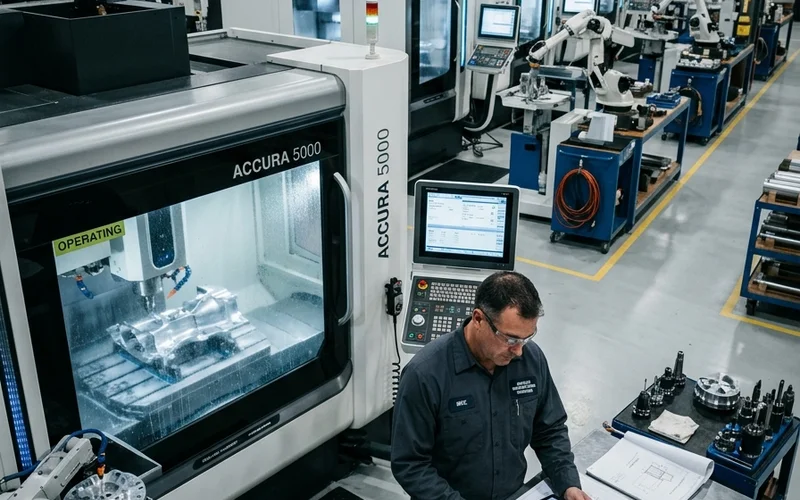
- The machine’s cell controller automatically indexes the next scheduled pallet, recalls the appropriate Mastercam NC program, and runs unattended overnight—achieving true “lights-out manufacturing.”
3. In-Process Touch Probing & Sister Tool Management
For a CNC machine to operate safely without constant human supervision, automated quality safeguards are essential:
- Spindle Touch Probing: Renishaw optical touch probes automatically measure raw workpiece datums, check critical feature tolerances mid-cut, and dynamically update work coordinate offsets (G54–G59) to compensate for tool wear.
- Laser Tool Breakage Detection: Between operations, cutting tools pass through a non-contact laser beam. If a broken tool is detected, the CNC controller immediately halts or calls a pre-loaded “sister tool” from the tool magazine, preventing wrecked parts and broken taps.
The High-Value Skills Needed for the Automated Shop Floor
To thrive in this automated manufacturing era, technicians must build a multidisciplinary skill set spanning:
- Robotic Teach Pendant Programming: Calibrating Tool Center Points (TCP), defining joint and linear motion paths, and programming conditional logic.
- Pneumatic & Hydraulic Circuit Design: Understanding solenoid valves, pressure regulators, and automated clamping sequences.
- PLC Ladder Logic & Sensor Interfacing: Connecting proximity sensors, optical safety light curtains, and safety relays to prevent cell collisions.
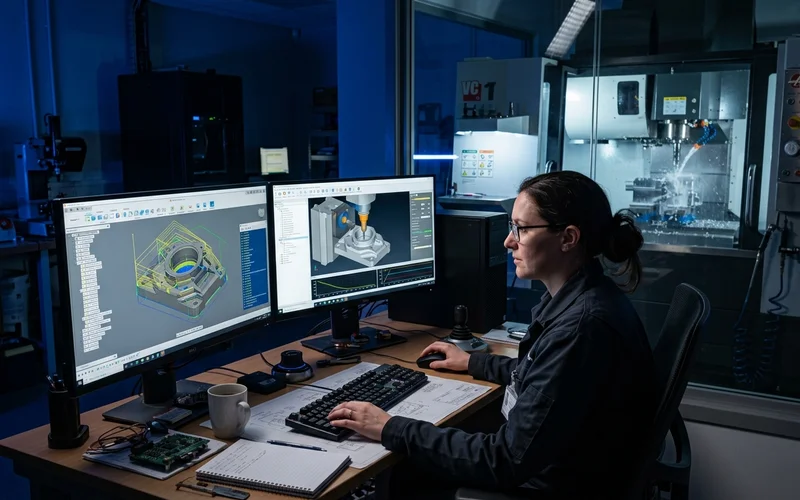
- CAD/CAM & Fixture Design: Creating modular zero-point fixturing and soft jaws in SolidWorks and Mastercam that allow reliable robotic grip clearance.
Leading the Automated Revolution
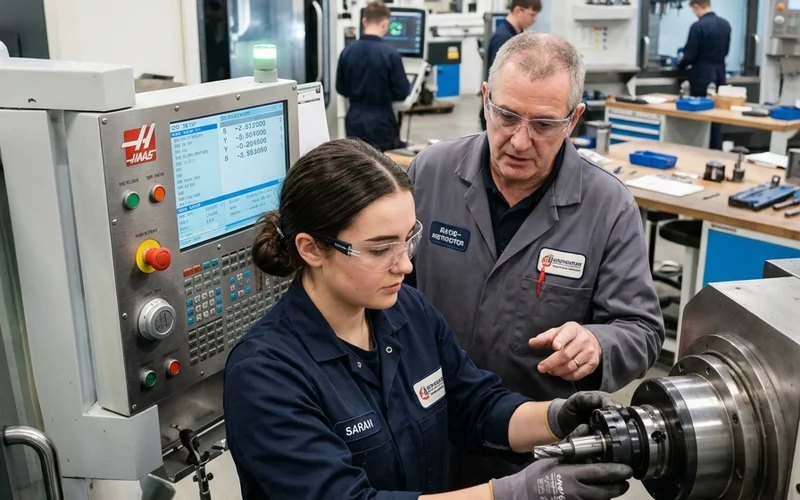
At LENOCAM Academy in Manjeri, Kerala, our Automation & Robotics curriculum connects real industrial robotic arms directly to CNC machine simulators, automated chucks, and PLC logic stations. Machinists who master both live CNC cutting and robotic automation command top salaries and lead advanced manufacturing facilities across India, the UAE, Saudi Arabia, and Europe.
Practical CNC training, technical insights, and precision manufacturing knowledge from LENOCAM Academy in Manjeri, Kerala.