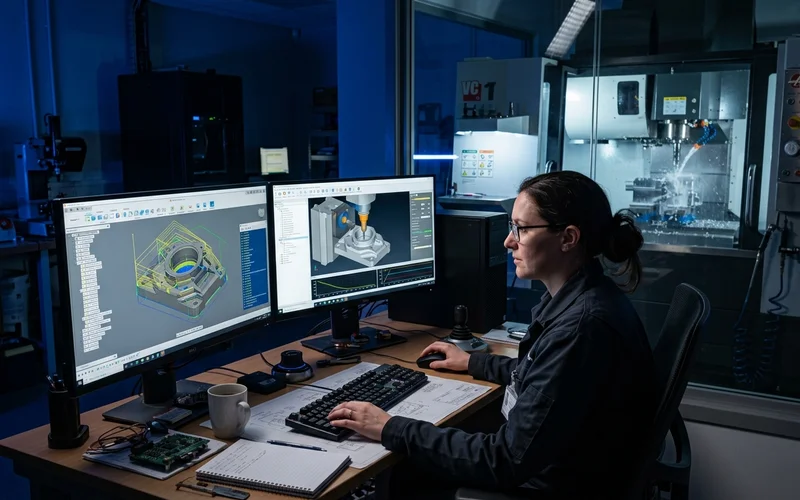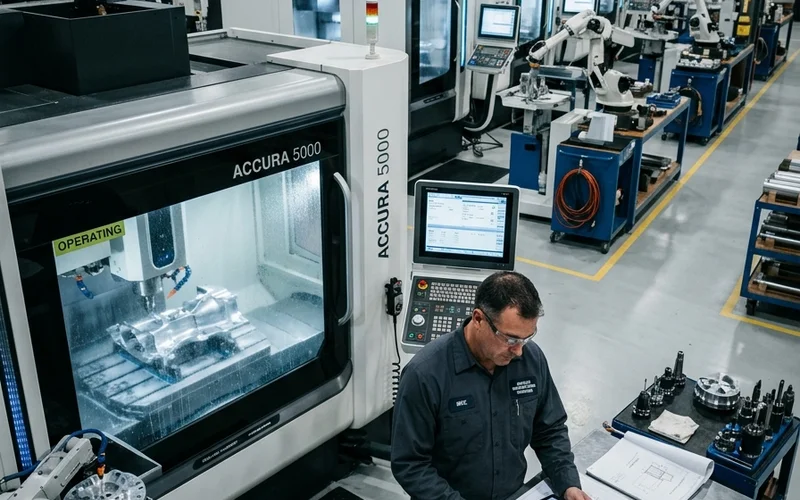
In modern precision manufacturing, reading about machine tools in a textbook or clicking through a 2D desktop simulator is fundamentally different from standing in front of an active 3-axis Vertical Machining Center (VMC) or CNC turning lathe. Understanding the critical difference between theoretical concepts and physical spindle execution is the single most decisive factor determining whether a technician thrives on the shop floor or struggles with costly crashes and scrapped workpieces.
The Critical Gap Between Simulator Software and Real CNC Spindles
Many traditional engineering colleges and vocational institutes teach CNC fundamentals exclusively through slides, isometric drawings, and software animations. While understanding Cartesian coordinate geometry (X, Y, Z axes) and ISO G-code syntax is necessary, a digital simulation simply cannot recreate the physical cutting realities of an industrial shop floor:
- Acoustic Feedback and Cutting Harmonics: Veteran machinists rely on sound as much as visual gauges. Spindle vibration, excessive cutter chatter, tool screeching, and inadequate chip evacuation are physical indicators that you only learn to detect, diagnose, and correct through live spindle experience.
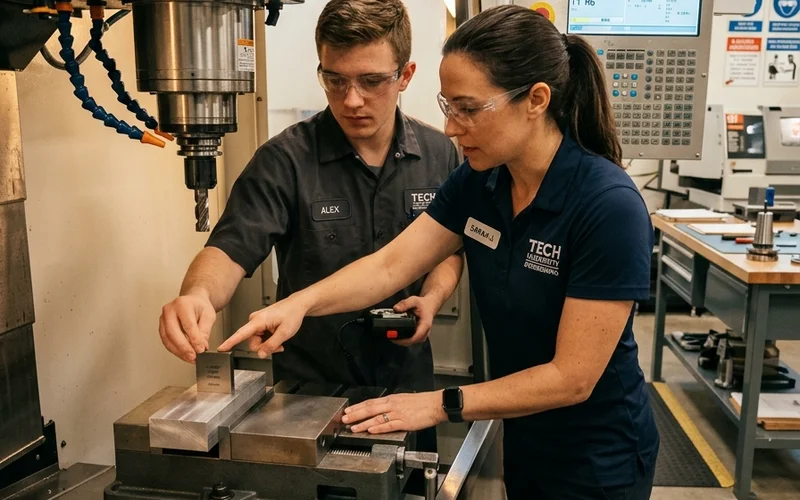
- Workholding Rigidity and Clamping Dynamics: A raw billet clamped with improper torque or in an out-of-square machine vise will deflect, vibrate, or throw under heavy roughing cuts. Learning how to indicate a vise to zero runout with a dial test indicator (DTI) and choose between hard vs. soft jaws requires physical machine hours.
- Thermal Expansion and Tool Deflection: As cutting tools engage hardened steel or aerospace aluminum alloys, frictional heat accumulates rapidly. Technicians must understand real-time thermal expansion, coolant nozzle direction, chip thinning, and radial tool deflection to hold tolerances below 10 microns (0.01mm).
Live Machine Setup: Where True Machinist Competence is Proven
Writing G-code is only one part of the manufacturing equation. Setting up the machine tool accurately is where profit is made or scrap is created. A comprehensive practical CNC training curriculum emphasizes three core setup pillars:
1. Work Coordinate System (WCS) Datum Setting
Students must gain repetitive, hands-on practice locating part origins (G54 through G59) using mechanical edge finders, 3D tasters, and automated Renishaw optical probes. An error of even 0.05mm at the datum stage compounds into dimensional failure across every subsequent toolpath.
2. Tool Height (H-Code) and Diameter (D-Code) Offsets
Every cutting tool in an Automatic Tool Changer (ATC)—from face mills and carbide end mills to center drills and thread taps—has a unique stickout gauge length. Students manually touch off tools against reference setter blocks, input tool geometry offsets, and apply cutter radius compensation (G41/G42) with lead-in vectors.
3. Dry Runs, Single-Block Execution & Distance-To-Go Verification
Before pressing cycle start on a new program at 100% rapid feed, professional machinists perform dry runs above the workpiece with single-block execution engaged, watching the controller’s “Distance-To-Go” display to confirm the tool stops exactly at the programmed Z-clearance plane.
Why Industrial Employers Value Practical CNC Experience
When precision manufacturing companies in aerospace, defense, automotive, and medical device manufacturing hire CNC programmers and operators, they prioritize candidates who require zero on-boarding supervision and can be trusted immediately around multi-million-rupee machinery.
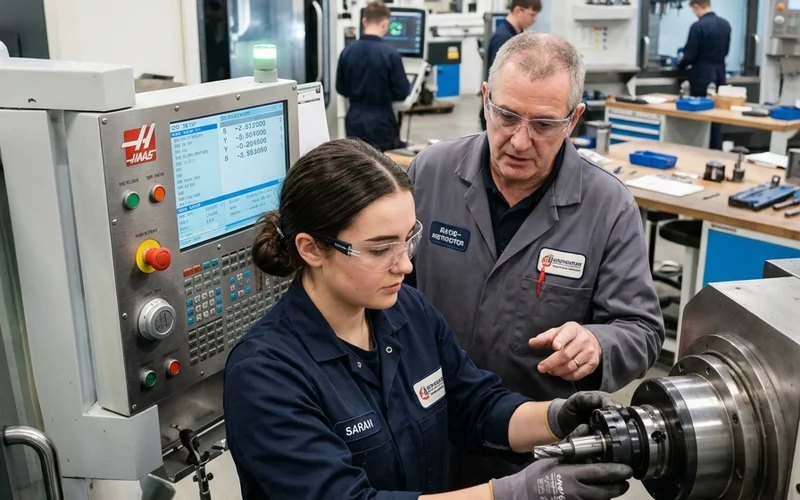
At LENOCAM Academy in Manjeri, Kerala, every theoretical module taught in the classroom is immediately verified at the physical spindle. Students program, set up, clamp raw stock, execute cuts, and inspect their own finished parts using precision digital micrometers and bore gauges under the guidance of seasoned industrial instructors. This hands-on confidence is what opens doors to top-tier manufacturing careers in India and the Gulf (UAE, Saudi Arabia, Qatar, Oman).
Practical CNC training, technical insights, and precision manufacturing knowledge from LENOCAM Academy in Manjeri, Kerala.