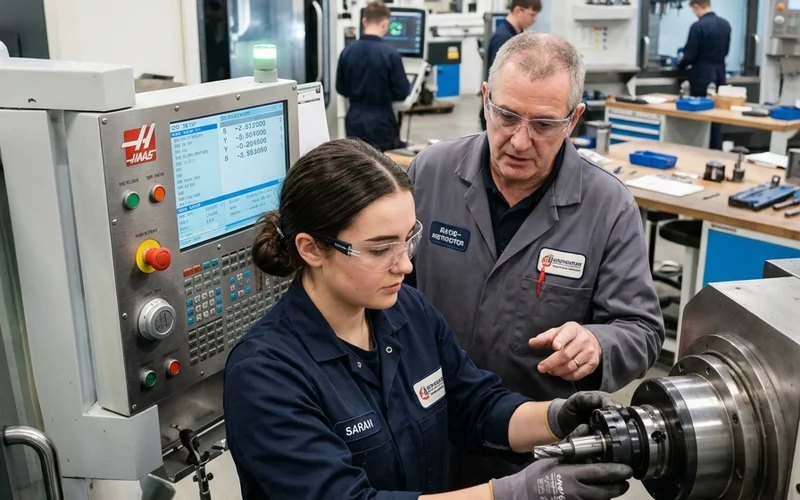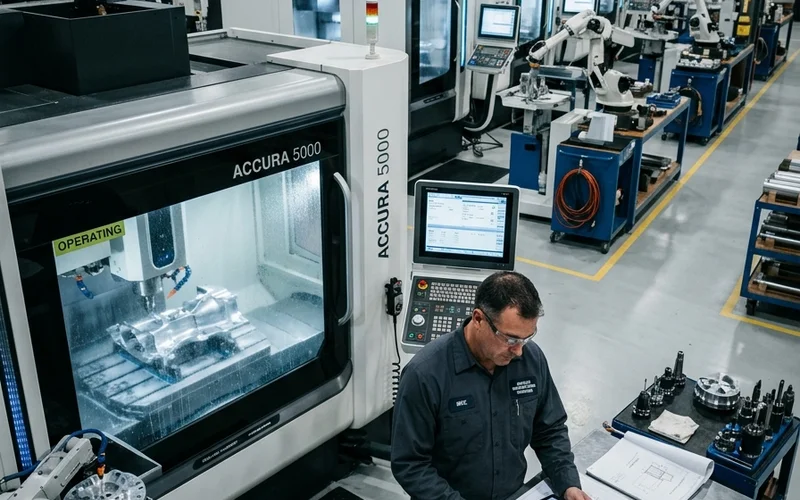
Stepping onto an active CNC production shop floor for the first time is a transformative experience. The synchronized roar of 12,000 RPM spindles, the mist of high-pressure through-coolant systems, and the rapid 30 m/min traverse speeds of multi-axis machining centers create an environment that demands absolute focus, safety vigilance, and rigorous operational discipline.
Whether operating in an aerospace manufacturing plant in Bangalore, an automotive tier-1 supplier in Chennai, or an oil & gas equipment fabrication hub in Saudi Arabia or the UAE, master machinists follow strict shop-floor protocols to ensure zero crashes, zero part rejections, and maximum spindle uptime.
The 5 Non-Negotiable Habits of Elite CNC Machinists
1. The Distance-to-Go Verification Protocol
The single most critical safety reflex when proving out any new or modified CNC program is using Single Block mode combined with Feed Rate Override (set to 10–25%) while continuously monitoring the controller’s Distance-to-Go (DTG) screen:
- When the tool moves down toward the workpiece on the initial Z-axis rapid move (G00 Z50.0 down to Z2.0), stop feed hold when the tool is approximately 25mm above the stock.
- Check the DTG display: If the screen shows
Z Distance-to-Go: 25.0mm, your work coordinate offset (G54 Z) is verified. If it reads100.0mmwhile the tool is hovering 25mm away, you have caught a coordinate error that would have caused a devastating spindle crash.
2. 5S Cleanliness as a Precision Metrology Discipline
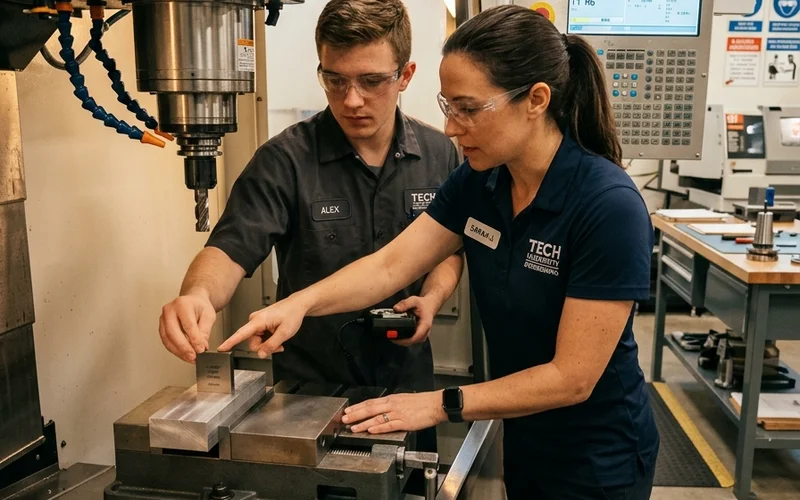
In high-precision manufacturing, a microscopic aluminum chip (0.05mm) trapped under a vise parallel or between the spindle taper and tool holder taper will tilt the tool or workpiece, causing excessive runout, poor surface finishes, and dimensional failure.
- Always stone vise beds, blow away swarf with compressed air, and wipe parallels with a clean lint-free cloth before seating raw stock.
- Tap the workpiece down firmly with a dead-blow brass or dead-blow urethane hammer and confirm both parallels are pinned tight without lateral wobble.
3. Cutting Edge Inspection Before Every Cycle
Never press green “Cycle Start” without inspecting the active cutting tools. A tiny chipped corner on a carbide end mill, built-up edge (BUE) on an insert, or worn coating will cause tool deflection, chatter marks, dimensional drift, and premature tool catastrophic failure. Inspect insert cutting edges under focused LED lighting and replace indexable inserts immediately upon detecting flank wear.
4. Incremental Tool Wear Offset Adjustments
When a finished part dimension drifts out of drawing tolerance due to thermal expansion or cutter wear:
- Never adjust the main Geometry Offset (H-code or D-code).
- Always use the Wear Offset table in small, controlled increments (e.g., -0.01mm or -0.02mm) and re-measure the subsequent workpiece.
- Document every wear offset change on the shift handover log sheet to ensure seamless continuity across production teams.
5. Blueprints & First Article Inspection (FAI) Rigor
A skilled machinist never assumes a part is good just because the cycle completed without alarms. The moment the first part is un-clamped:
- Deburr all sharp edges thoroughly.
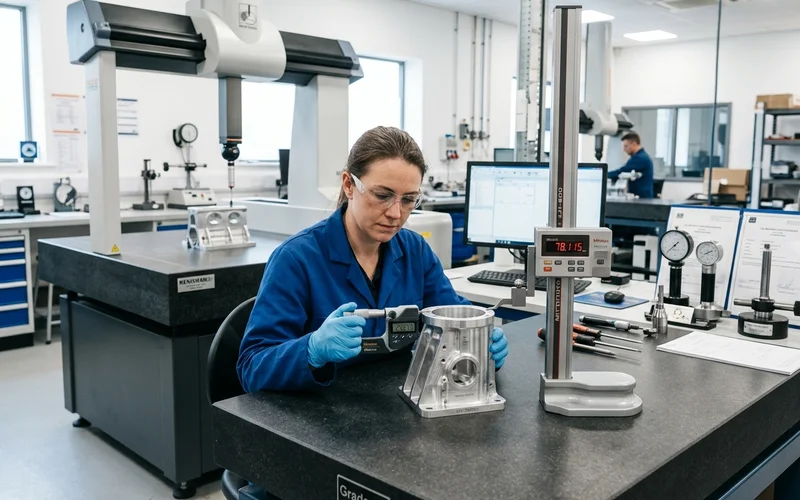
- Measure critical diameters, bore depths, and step heights using calibrated outside micrometers, internal three-point bore gauges, and vernier height gauges on a granite surface plate.
- Record readings against drawing tolerances before proceeding with continuous batch machining.
The Foundation of a Long-Term CNC Career
Technical excellence on the shop floor is not measured by how fast you run, but by your repeatability, safety discipline, and zero-defect consistency. When shop supervisors observe a machinist who methodically checks DTG, maintains clean fixturing, and protects machine tooling, that technician is quickly elevated to senior setup machinist, programmer, and shift lead.
At LENOCAM Academy in Manjeri, Kerala, every student practices these exact industrial disciplines daily on live CNC machinery under the mentorship of veteran production engineers.
Practical CNC training, technical insights, and precision manufacturing knowledge from LENOCAM Academy in Manjeri, Kerala.